

Nissan is gaining market share faster than its competitors, but the automaker is paying heavily to maintain that momentum. As the broader automotive industry reduces incentives, Nissan increased its average vehicle incentives to $4,005 in July, a 14% increase from the previous year. By comparison, the industry average fell 10%.
While automakers such as Toyota and Honda reduced promotional spending, Nissan continued putting substantial cash behind its vehicles. The strategy is designed to support retail sales growth while the company focuses on domestically built vehicles instead of relying on rental fleets, which recently declined 32%.
Nissan Expands U.S. Production Strategy
Nissan’s growing reliance on U.S.-built vehicles has changed the economics of its sales strategy. According to sales chief Tiago Castro, domestically produced vehicles now account for 60% of Nissan’s retail sales, up from 50% last year.
The shift has also required larger incentives because Nissan is increasingly selling larger crossovers with higher sticker prices. Offering zero-percent financing on a $60,000 vehicle, for example, carries a much greater financial cost than subsidizing a less expensive commuter car.
Rogue Leads Nissan’s Incentive Push
Nissan is directing substantial incentive spending toward light trucks while cutting incentives on cars by 43%. The strategy places utility vehicles at the center of the automaker’s sales recovery.
Spending on the Rogue nearly doubled to $125.7 million in July, accounting for more than 40% of Nissan’s incentive budget for the month. Because the Rogue is Nissan’s most leased vehicle, the targeted spending helped drive a 47% increase in monthly sales.
Armada and Frontier Also Get More Support
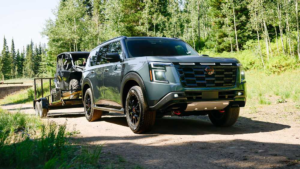
Nissan is also increasing incentives on larger utility vehicles. Spending on the Armada tripled as the company redirected Middle Eastern inventory toward the U.S. following the Iran war. Armada sales subsequently increased 40%.
The Frontier pickup also received significantly more incentive support, with spending increasing 67%. The strategy demonstrates Nissan’s willingness to spend heavily to move higher-margin utility vehicles from dealership lots.
Nissan Bets on Loyalty and Retention
The aggressive incentive strategy is aimed at more than short-term sales. Nissan is using the spending to support lease retention and strengthen customer loyalty, which recently increased by nearly five percentage points.
Keeping existing customers within the brand can require greater upfront spending than attracting new buyers, but Nissan is betting that stronger retention will create a more durable customer base over time.
Higher Incentives Are Moving Buyers Into More Expensive Trims
Nissan’s strategy is also changing the mix of vehicles being sold. Low-end Rogue variants previously represented 70% of the product mix, but that figure has fallen to 40%.
That shift means Nissan’s incentive spending is increasingly being used to support higher-value vehicles rather than simply moving its least expensive models. By spending heavily to sell more expensive vehicles today, Nissan is making a broader bet that stronger sales, customer retention and brand loyalty will support its long-term recovery.