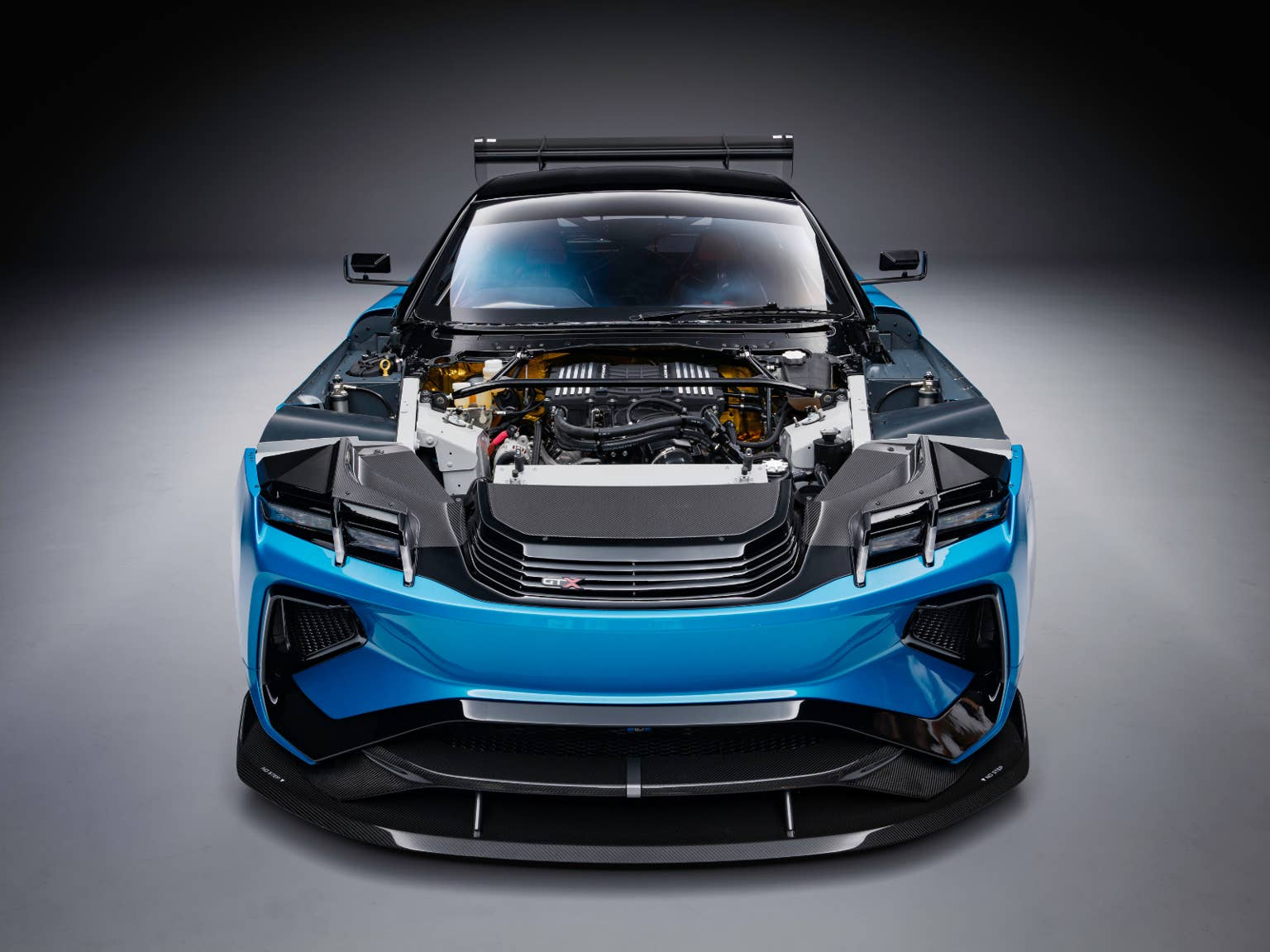
The Jensen Interceptor GTX is opening a new chapter for the British brand with a track-only prototype that combines a supercharged V8, rear-wheel drive and a lightweight, motorsport-focused design. Developed as Jensen International Automotive’s first clean-sheet design, the GTX builds on the company’s experience restomodding classic Interceptors while introducing a new-car program.
A New Direction for Jensen
Ford pushed the current S650 Mustang generation further with models such as the Mustang GTD, its most capable production version yet. The Mustang GTD competes with the Chevrolet Corvette for bragging rights as America’s best performance car, although the Corvette takes a more mid-engine, supercar-like approach.
The Jensen Interceptor GTX offers a British interpretation of a similar formula. It features a front-mounted supercharged V8, rear-wheel drive, a long hood and a track-focused character.
Jensen International Automotive has long focused on restomodding classic Interceptors from the model line introduced in 1966. The GTX prototype is different, serving as the company’s first clean-sheet design rather than another restomod.
Track-Focused Exterior and Aerodynamics
The GTX was designed with Avant Design. Coventry Metalcraft, based in the UK, handcrafts its aluminum body, while Northamptonshire-based Artiglio Automotive Studio produces the carbon-fiber aerodynamic components.
The front fascia has a resemblance to a Mustang, while the rear offers hints of a 992-generation Porsche 911 with a more athletic appearance. An adjustable two-plane rear wing is claimed to generate more than 350 kg (772 pounds) of downforce.
The cabin follows the car’s track-focused mission with an FIA-approved safety cage, Tillett carbon-fiber competition seats, six-point harnesses and a Lifeline fire extinguisher system.
A configurable MoTeC digital display provides information including temperatures, pressures, gear selection and engine data. Despite its motorsport-oriented equipment, the interior also features Alcantara trim and padding, orange stitching and a retrimmed motorsport steering wheel.
960-HP Supercharged V8
Like the original 1966 Interceptor, which used a Chrysler big-block V8, the modern GTX incorporates American hardware. Its 6.8-liter supercharged V8 was developed and built by Houston-based Late Model Engines.
The engine uses fewer than 20% GM parts and is rated at 960 horsepower in the prototype. Depending on its application and tuning, the engine can produce up to 1,200 hp and more than 1,100 lb-ft of torque.
Power is sent through a rear-mounted Samsonas Motorsport 6-speed sequential transaxle with straight-cut dog gears. Drivers can shift using either a lever on the transmission tunnel or steering-column-mounted paddles.
Purpose-Built Chassis and Brakes
The Interceptor GTX uses hydraulic power-assisted steering, a bespoke carbon-fiber driveshaft and a Wavetrac differential. Its suspension consists of front and rear aluminum double wishbones paired with custom-built Nitron three-way adjustable dampers.
The prototype rides on custom 20-inch one-piece forged aluminum Vossen wheels with Michelin Pilot Sport tires. Braking comes from a motorsport-grade AP Racing package developed with UK-based BG Developments.
The system uses floating steel discs rather than carbon-ceramic alternatives to “prioritize consistency, usability, and repeatable performance under varied track conditions.”
The GTX Is the Start of a Larger Program
The Interceptor GTX remains a prototype undergoing development, and the launch release does not disclose pricing or confirm U.S. availability.
The development program is intended to shape the planned street-legal Interceptor GTR, which will be followed by a GT road car focused on luxury. Around 80% of the GTX’s exterior form is intended to carry over to the eventual road-going range.
If those plans materialize, the three models could give Jensen different interpretations of the same nameplate and help the brand reach a broader audience, much as Ford does with the Mustang.