

Stellantis reported stronger second-quarter results after absorbing billions in charges tied in part to its electric vehicle pullback. The automaker posted net revenue of €43.5 billion (approximately $50.2 billion at current exchange rates), a 13% increase from the same period last year, with North America delivering the strongest performance led by the Jeep Grand Wagoneer.
North America Drives Stellantis’ Second-Quarter Growth
North America was the company’s strongest-performing region during the quarter, with the Jeep Grand Wagoneer recording a 43% year-over-year increase in retail sales in Q2 2026. The full-size SUV competes in the same segment as the Cadillac Escalade.
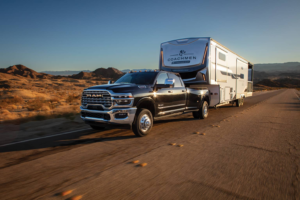
Other key performers included the Ram 1500 and Dodge Durango, both posting 9% retail sales growth, while the Chrysler Pacifica increased 7% compared with the same period a year earlier.
Stellantis also increased its North American market share to 7.4%, representing a gain of 40 basis points year over year.
Expanded Powertrain Lineup Supports Sales
According to Stellantis, new products and expanded powertrain offerings helped fuel growth in North America. Although the company’s earnings release did not provide a detailed product breakdown, Stellantis had previously expanded its internal combustion lineup.
Among those additions is the returning Ram 1500 TRX SRT, powered by a 6.2-liter supercharged HEMI V8 producing 777 horsepower, exceeding the Ford F-150 Raptor R’s factory rating of 720 horsepower.
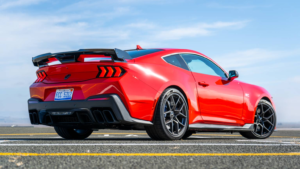
The Dodge Charger lineup has also expanded beyond the all-electric model to include the gasoline-powered Sixpack, equipped with a 3.0-liter twin-turbocharged inline-six engine.
Meanwhile, the Dodge Durango lineup now comes standard with HEMI V8 power, and dealer orders for the R/T 392 Launch Edition previously sold out within six hours.
Financial Performance Improves Across Most Regions
North American net revenue increased 32% year over year, while South America posted a 6% gain. Revenue in Enlarged Europe remained flat, while the Middle East and Africa and Asia Pacific recorded slight declines.
Adjusted operating income reached €773 million (approximately $892 million), representing a 1.8% operating margin. Every operating region posted a positive result except Enlarged Europe, which reported a negative 0.6% margin.
Industrial free cash flow totaled €1 billion (approximately $1.15 billion) during the second quarter of 2026, improving by roughly €1 billion compared with the same period last year.
Company Reaffirms 2026 Outlook Despite Tariff Costs
Stellantis reaffirmed its 2026 outlook as it continues implementing its FaSTLAne 2030 strategy. However, the company said tariffs remain a significant financial challenge.
The automaker now expects tariff-related headwinds of between €1 billion (approximately $1.15 billion) and €1.2 billion (approximately $1.38 billion) this year. During the first half of the year, Stellantis recorded net tariff costs of €0.3 billion (approximately $346 million), despite receiving a €0.4 billion (approximately $462 million) refund under the International Emergency Economic Powers Act tariff program.
FaSTLAne 2030 Focuses on Core Brands
Under its FaSTLAne 2030 strategy, Stellantis plans to allocate 70% of its brand and product investments to Ram, Jeep, Peugeot, Fiat, and its Pro One commercial vehicle business.
In North America, Ram and Jeep will remain the company’s primary growth drivers. Stellantis is targeting approximately 825,000 Ram sales in the region by 2030, roughly 85,000 more than Jeep’s sales target.
The second-quarter results reflect improving financial performance as Stellantis continues executing its long-term strategy while navigating ongoing tariff-related costs and expanding its product portfolio.